

Search
Recent Posts
October 18, 2026 • 6 Minute Read
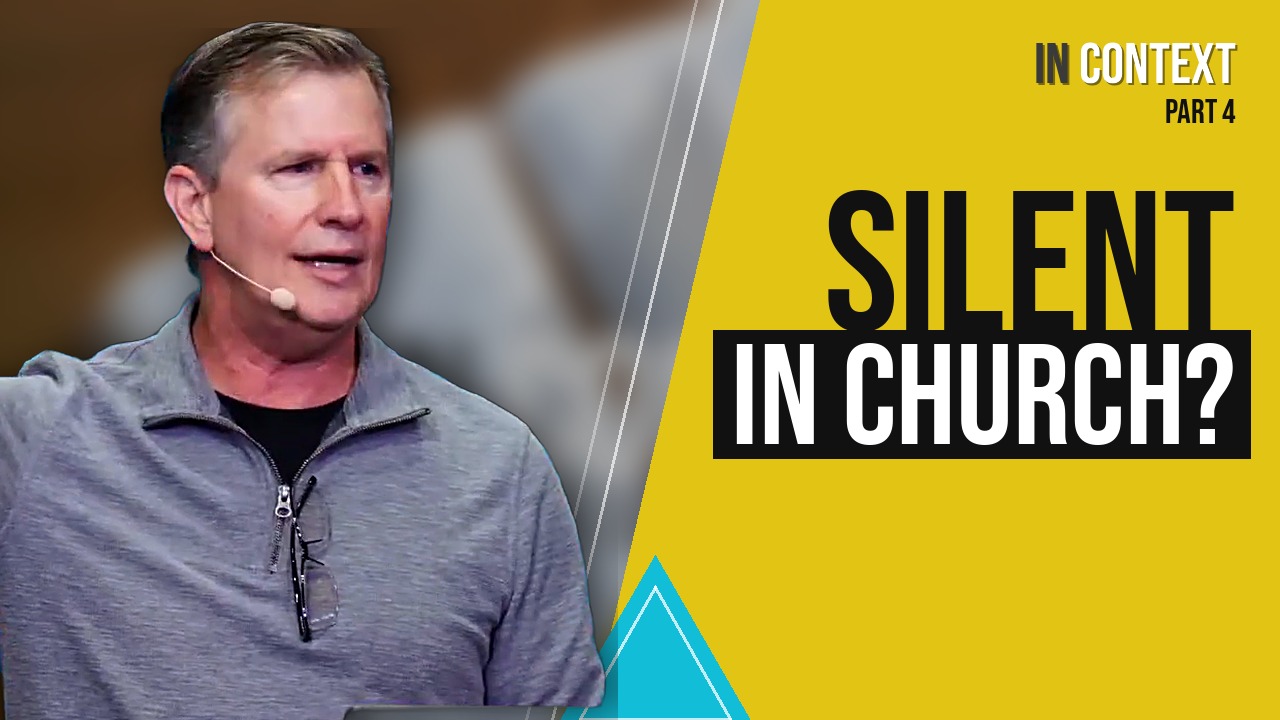
Should Women Be Silent in Church? What 1 Corinthians 14:34 Means
We have our mug verses. Jeremiah 29:11. Philippians 4:13. Great verses. This one doesn't usually get put on a mug: "Women should remain silent in the churches. They are not allowed to speak, but must be in submission, as the law says." (1 Corinthians 14:34) It gets abused from a couple of different sides. One side uses it to silence women. Another side uses it to silence the Bible: look at Paul, he's sexist, throw it all away. And a lot of people are in the middle, not sure what to do with it. Let's be honest. This is a difficult passage to understand. But once we put it in context, it gets easier. We're walking in on a conversation Paul planted the church in Corinth and lived there about 18 months. When we read his letters, we're coming in on the middle of a conversation. He'd already written them a letter we don't have (1 Corinthians 5:9). They wrote him back with questions (7:1). We don't have that one either. It's like there's a phone conversation going on and you walk in on the middle of it. You're only hearing one side. So the first question is not, what's wrong with Paul? The question is, what's going on in Corinth? And here's what we do know about Paul. His ministry was full of women. Phoebe, who carried the letter to the Romans. Priscilla, whose name comes before her husband Aquila's. Junia, "outstanding among the apostles." Euodia and Syntyche, who contended at his side for the gospel. A gifted church that was a mess Corinth was a port city. Rich, busy, diverse, and wild. Paul says the church "did not lack any gift." It was also a mess. Fan clubs. Lawsuits. People getting drunk at the Lord's Supper. And worship was chaos. Tongues over tongues. Prophets over prophets. Everybody wanted the mic. Chapter 12 is about spiritual gifts. Chapter 13 is about love. Chapter 14 puts them together: how do you bring the gifts and love into a service? "When you come together, each of you has a hymn, or a word of instruction, a revelation, a tongue or an interpretation. Everything must be done so that the church may be built up." (1 Corinthians 14:26) Notice who he's talking to. Not just the men. The brothers and the sisters. Each of them has something to bring when the church gathers. Remember that, because Paul says it again at the end of the chapter: "Therefore, my brothers and sisters, be eager to prophesy" (14:39). The same word, three times Then Paul gives three groups the same instruction. If someone speaks in a tongue and there's no one to interpret, "the speaker should keep quiet in the church" (14:28). If a revelation comes to someone sitting down, "the first speaker should stop" (14:30). In the Greek, that's the same word: silent. Then 14:34. Women should remain silent. Same words, same point. He's not saying any of these people should never talk in the church. There's a time to be quiet and there's a time to speak. And just a few chapters earlier, Paul talks about women who pray and prophesy in church (11:5). He doesn't condemn it. So "silent" can't mean they could never say anything. What it meant back then There are about five views on what this meant to them. Where I land: there was disruptive talk and questions going on in their meetings, and Paul was putting everything in its proper order: those speaking in tongues, the prophets, and the questions. Corinth was an honor-shame culture. A wife speaking directly to another man in public would have been seen as disgraceful. So Paul says, "If they want to inquire about something, they should ask their own husbands at home" (14:35). I don't see that as a negative thing. In a culture that didn't care what women knew, Paul wanted them to learn. "In a chaotic church, Paul told certain voices to hold back so the whole church could be built up." What it means for us When we're dealing with difficult texts, we don't start with that text. Your starting point always determines your ending point. So we start with what's clear. Creation: God created mankind in his own image, male and female (Genesis 1:27). Redemption: in Christ there's neither Jew nor Greek, slave nor free, male nor female. We're all one in Christ Jesus. From there, here's what we know. Ministry is shaped by gifting, not by gender. The Spirit was poured out on sons and daughters. If God has gifted somebody, who are we to say they can't use it? Paul gave the church in Corinth instructions so the whole church could be built up. Here are four ways that applies to us. 1. Don't silence what God has gifted At Cornerstone, women pray out loud, read Scripture, lead worship, lead life groups, teach our kids, and give messages on Sunday morning. They're not violating 1 Corinthians 14:34. They're fulfilling 14:26: each of you has a hymn, a word of instruction. 2. Check your own mouth When we come together, there should be peace. People should learn. We should be encouraging one another. One of the ways that happens is by the words that come out of our mouths. When we're greeting people on Sunday or talking on Wednesday night, are we building people up? 3. Make room for everybody to learn "Ask your husbands at home" fit an honor-shame culture. It isn't a requirement for us. We try to make our church a place where questions are welcome. In life group, throw out your question. Let's wrestle with it. Culture does shape what Paul wrote. He told them, "Greet one another with a holy kiss." Nobody here wants to do that. If he was writing to us, he'd say greet each other with a handshake or a hug. The form changes, but the heart doesn't. 4. Worship should look like God "God is not a God of disorder, but of peace" (14:33). Paul was bringing order to a church in chaos. Order is not the enemy of the Spirit. And chaos isn't proof of power. When we gather, it should be peaceful, it should be ordered, and it should build people up. The gospel gives you a voice Jesus went to the cross and stayed silent. "As a sheep before its shearers is silent, so he did not open his mouth" (Isaiah 53:7). If anybody could have said something, it was Jesus. "The gospel doesn't silence you. The gospel gives you a voice." God has gifted you, no doubt. You have talents and abilities that can help build up families in this church. Maybe that's joining the greeter team, helping in children's ministry, or serving at an outreach or event. So here's the question for this week: What has God given me to bring to this church? And am I using it for his glory? Watch the full message: https://youtu.be/Bq9Hs-Qm3Zw Plan your visit


October 11, 2026 • 5 Minute Read
Is Proverbs 22:6 a Promise? What "Train Up a Child" Means
You'll find Proverbs 22:6 on baby dedication certificates. You might see it on a quilt hanging over the side of a crib. "Train up a child in the way he should go, and when he is old he will not depart from it." Out of context, this is usually how we read it: if I raise my kids right, they'll turn out right. Guaranteed. That verse sounds like good news until it isn't. Some of you raised a child in the ways of the Lord. You took them to church, prayed over them, took them to youth camp, and lived it in front of them. And then a son walked away, or a daughter doesn't want anything to do with church. Now the verse feels like a verdict: if they didn't turn out right, I must have not trained them right. One side reads it as a guarantee. The other side reads it as a guilty verdict. Here's the good news. It's neither one. We're in a series at Cornerstone called In Context, and each week we ask five questions of a well-known verse: Author, Audience, Around, Ancient, and Application. Who wrote it Solomon wrote it. Proverbs 1:1 tells us, "The proverbs of Solomon." Here's what's interesting. 1 Kings 11:4 says, "As Solomon grew old, his wives turned his heart after other gods, and his heart was not fully devoted to the Lord his God." The very man who wrote "when he is old he will not depart" is the one who departed when he got older. And his son Rehoboam, raised by the wisest dad, rejected wise counsel and went his own way. "It's a proverb. A proverb is not a promise." A proverb is a short, memorable saying about how life usually works. Early to bed, early to rise. An apple a day. Good principles. No guarantees. It's wisdom. It's not a warranty. Who it was written to Proverbs keeps saying, "Listen, my son." It was primarily written to young people, not parents. And all through the book you see the same thing: you have a choice. Your parents can teach you, but you have to walk in it. When a child doesn't follow the path, Proverbs doesn't call the parent a failure. It says, "A foolish son brings grief to his mother" (Proverbs 10:1). Anybody who's had a child wander off knows that grief. What's around it The verse right before talks about two paths (Proverbs 22:5). That's the picture of the whole book: the way of wisdom and the way of folly. Verse 15 adds, "Folly is bound up in the heart of a child." You don't have to teach a kid to say "mine." Scripture shows it cuts both ways. Samuel's sons did not follow his ways. Hezekiah was one of Judah's best kings, and his son Manasseh was one of the worst. But Hezekiah's own dad, Ahaz, worshiped idols, and Josiah's dad was wicked too. A good home does not guarantee godly children, and a hard home does not doom them either. Even the perfect Father: "I reared children and brought them up, but they have rebelled against me" (Isaiah 1:2). What "train up" means The Hebrew word means to dedicate, to start off, like dedicating a house or the temple. The NIV says, "Start children off on the way they should go." It's a launch word. It's not a lifetime guarantee. Scholars read "the way he should go" three ways, and all three agree on this: what you start early tends to stay. "Untrained is still trained." Something or somebody's going to train your child. If it's not you, it's going to be friends. It's going to be a phone. It's going to be the culture. It's going to be their own heart. There's no neutral zone. What we do with it If your child has wandered, let go of the false guilt. False guilt looks at the outcome and says, they walked away, so I must have failed. But this isn't a scapegoat either. Eli asked his sons, "Why do you do such things?" (1 Samuel 2:23) and never stepped in. That's real guilt. Real guilt looks at what I did: I knew, and I didn't act. You're not responsible for your child's choices, but you are responsible for yours. Real guilt gets forgiven when we take it to God and to that person. Maybe one of the most important days in the life of your child is the day you go and say, "I'm sorry. I didn't do that right. Will you forgive me?" False guilt just gets carried. "Faithfulness is your job. Fruit is God's." We plant. We water. God makes the heart grow. So train the heart, not just the behavior. Deuteronomy 6:6-7 says these words go on your heart first, then you talk about them when you sit at home, walk along the road, lie down, and get up. We can't lead them somewhere we're not living. Love and discipline were always made to go together. A lost phone at 14 is a lot better than a lost job at 30. If you're in the thick of it, don't quit. And keep praying. The story isn't over. Manasseh, the worst king, humbled himself before "the God of his ancestors" (2 Chronicles 33:12). The training was still in there. Start them early. Point them to the way. Point them to Jesus. Live it in front of them. Your hope for your kids isn't in your parenting ability. It's in God and his pursuit of your children. Watch the full message Plan a visit to Cornerstone
October 4, 2026 • 9 Minute Read
Wives, Submit? What Ephesians 5:22 Really Means
Some verses get read at weddings. Some verses get read at people. This one gets read at people. “Wives, submit yourselves to your own husbands as you do to the Lord.” (Ephesians 5:22, NIV) If you’ve been in church long enough, you’ve heard it used like a gavel. The argument’s over. “The Bible says submit.” Case closed. And if you have friends who don’t follow Jesus, you’ve heard it from the other side. “That’s exactly why I don’t go to church. The Bible says women are property.” So the verse gets pulled in two directions. One side uses it to win arguments. The other side uses it to dismiss the whole Bible. Here’s what’s wild. Many who take verse 22 out of context don’t quote verse 21 with it. And they definitely don’t quote verse 25. This is tender ground. Some of you are in a great season of marriage. Some of you are in a hard one. Some of you are single, divorced, or widowed. And some of you have had this verse used against you in ways that hurt. So let’s slow down and read it the way Paul wrote it. Five questions. One hand. Let’s put it back In Context. Author: Who wrote it? Paul. And he wrote it from prison. He calls himself “the prisoner of Christ Jesus” (3:1) and “an ambassador in chains” (6:20). So when Paul writes about laying down your life for someone, he’s not writing from a comfortable office. He’s writing from chains. It’s a letter. But this section (5:22 to 6:9) is a special kind of writing inside the letter. Scholars call it a household code. Instructions for the people in a home. Wives and husbands. Children and parents. Slaves and masters. Philosophers and moralists wrote these all the time. Everybody knew the format. And when you know what a household code normally sounded like, you can hear what Paul changed. Audience: Who was it written to? “To God’s holy people in Ephesus.” (1:1) Ephesus was one of the biggest cities in the Roman Empire. Home to the temple of Artemis. Most of these believers were Gentiles. They didn’t grow up with the Scriptures. They grew up with idols and a culture where the man of the house held almost all the power. Now they’re following Jesus. And they’re asking, “What does a Christian home look like?” Look at how the letter is built. Chapters 1 to 3 are what God has done for you in Christ. Chapters 4 to 6 are how to live because of it. So by the time Paul gets to marriage, he isn’t handing out rules to earn God’s favor. He’s talking to people who already have it. Grace first. Then the home. Around: What comes before and after? This is the one that changes everything. Start with the heading. Open an NIV and you’ll see a bold heading right before verse 21: “Instructions for Christian Households.” Open a New King James and the heading comes after verse 21, right before verse 22: “Marriage, Christ and the Church.” Same passage. Two good translations. Two different places to break it. Here’s the thing. Neither heading is in the Bible. Paul didn’t write headings. Translators added them to help you find your place. They’re helpful. But they’re not inspired. So why can’t the translators agree? Because verse 21 won’t stay on one side. Look backward. Verse 18 says, “Be filled with the Spirit.” Then Paul describes a Spirit-filled life. Speaking to one another in psalms and hymns. Singing to the Lord. Giving thanks for everything. Submitting to one another. In Greek, that’s one long sentence. Submitting is on the same list as singing and giving thanks. It’s not a punishment. It’s a mark of a Spirit-filled life. Now look forward. In the oldest Greek manuscripts we have, verse 22 doesn’t have a verb. It literally reads, “Wives, to your own husbands, as to the Lord.” That’s it. No “submit.” The word gets borrowed from verse 21. Verse 22 can’t stand up without verse 21 holding it. (Later manuscripts added “submit,” probably because a scribe thought verse 22 looked incomplete on its own. That’s why the New King James has it and the NIV adds it in English.) So verse 21 is a hinge. It finishes the Spirit-filled list, and it opens the section on the home. Its whole job is to hold them together. You can’t preach verse 22 without verse 21. And verse 21 doesn’t say “wives, submit.” It says “submit to one another.” Everybody. Now count the verses. To wives: three verses (22 to 24). To husbands: nine verses (25 to 33). Paul spends three times as long on the husbands. If you only remember the wives’ part, you missed most of the passage. Then compare two verses. “Walk in the way of love, just as Christ loved us and gave himself up for us.” (5:2) “Husbands, love your wives, just as Christ loved the church and gave himself up for her.” (5:25) Same words. Gave himself up. What Paul asks of husbands is exactly what Jesus did for all of us. Ancient: What did it mean back then? About 350 years before Paul, Aristotle wrote that a household has three pairs. Master and slave. Husband and wife. Father and children. In every pair, one rules and one is ruled. And those codes were written to one person. The man. Telling him how to run his house. Roman law backed it up. Now read Ephesians 5 again. Paul changed three things. 1. He talks to the wives. Directly. “Wives.” In most household codes, the wife was talked about, not talked to. Paul treats her as a person who makes her own choices before God. 2. Submission is a choice. The Greek word is hypotassō, and the form Paul uses means to put yourself under. Nobody can force it on you. You give it. And Paul never once says, “Husbands, make your wives submit.” Submission is something a wife offers. It’s never something a husband takes. 3. He never tells husbands to rule. Every household code in that world told the husband to rule his wife. Paul tells him to love her. And the word is agapaō. The love of the cross. “Just as Christ loved the church and gave himself up for her.” You think headship means you’re on top? In Christ, headship means you go first. To the cross. What about “head” in verse 23? Good, Bible-believing scholars debate whether kephalē means authority or source. But Paul defines it right there in the verse. Christ is head as “the Savior.” The head Paul describes rescues, feeds, and cares for the body (v. 29). Today, faithful Bible teachers land in two main places. Some hold that God designed a loving, servant leadership for husbands (complementarian). Others hold that verse 21 sets the tone and husbands and wives submit to each other as equals (egalitarian). Both come from people who love Jesus and believe the Bible. And both agree on this: Paul is not giving husbands permission to control, demand, or dominate. He’s taking the most powerful person in the ancient home and telling him to lay his life down. What It Means for Us Now So can you still read Ephesians 5:22? Yes. It’s God’s Word. But read it with verse 21 in front of it and verse 25 behind it. This passage is never a cover for abuse. Submission is “as to the Lord.” Nothing about the Lord asks you to sin, and nothing about the Lord asks you to be harmed. A husband who hurts, threatens, or controls his wife is not exercising headship. He is breaking verse 25. If you’re in a home that isn’t safe, you are not failing God by getting help. Husbands, you go first. This passage asks more of us than it asks of them. She is called to honor you. You are called to die for her. When was the last time your marriage cost you something? Your pride. Your schedule. Your remote. Your right to win the argument. Jesus didn’t wait for the church to be lovely before he loved her. He loved her to make her lovely (vv. 26 to 27). Wives, your honor matters. Paul ties your respect to your relationship with Jesus. “As you do to the Lord.” When you honor your husband, you’re doing it for Christ. That’s not weakness. Jesus himself submitted to the Father (Luke 22:42). Submission is not less than. It’s what Jesus looks like. All of us, submit to one another. Verse 21 isn’t just for married people. It’s for the whole church. What would Cornerstone look like if every one of us walked in asking, “Who can I put first today?” Single, divorced, or widowed? This is still your passage. Paul says, “This is a profound mystery, but I am talking about Christ and the church” (v. 32). Marriage is a picture. The main point is what it’s a picture of. You’re not on the outside of this passage. You’re in it. You are part of the bride. The Groom Who Gave Himself Up Jesus is the husband who left his Father’s side. He came down for his bride. He found her dirty, and he washed her. He found her stained, and he gave his life to make her radiant. The marriage in Ephesians 5 isn’t first about you and your spouse. It’s first about Jesus and you. And here’s the turn. In this passage, Jesus submitted first. He submitted to the Father. He submitted to the cross. He laid himself down so his bride could be lifted up. The screenshot says, “Wives, submit.” The passage in context says something bigger. Everybody, put each other first. Wives, honor your husbands as an act of worship. Husbands, love your wives enough to die for them. And all of it is a picture of what Jesus did for us. Some people think this passage is about who’s in charge. It’s about who goes to the cross.
September 27, 2026 • 6 Minute Read
The Mug Verse: What Jeremiah 29:11 Really Means
Have you ever walked in on half of somebody’s phone call? You walk into the kitchen on Thanksgiving morning and hear, “We have to get rid of the body before anybody gets here.” You’re reaching for your phone to call 911. Then you find out they’re talking about the turkey. Half the conversation will get you the wrong story every time. Hollywood does it on purpose. A critic writes, “A masterpiece of wasted potential.” The poster says, “A masterpiece!” There’s even a word for it. Contextomy. Cutting words out of their context so they say something the speaker never meant. Here’s the thing. We do that to God all the time. We take one line out of the Bible and put it on a coffee mug, a T-shirt, or an Instagram post. And we never read the conversation around it. That matters. When you rip a verse out of its story, you can make the Bible say almost anything. In Matthew 4, Satan quoted Psalm 91 to Jesus. He got the words right. He just ripped them out of context. Out-of-context verses can create false promises. They set people up for disappointment with God. So in our new series, In Context, we’re putting famous verses back where they belong. The 5 A’s Every week we use the same five questions. One on each finger. • Author. Who wrote it, and what kind of writing is it? • Audience. Who was it written to? • Around. What comes before and after? • Ancient. What did it mean back then? • Application. What does it mean for us now? You can use them on any verse in the Bible for the rest of your life. And don’t worry. I’m not taking your favorite verse away. I’m giving it back to you. Bigger than you ever knew. The Most Popular Verse in America “For I know the plans I have for you,” declares the LORD, “plans to prosper you and not to harm you, plans to give you hope and a future.” (Jeremiah 29:11, NIV) Graduation cards. Wall art. Tattoos. Coffee mugs. Here’s how most of us read it: God has a good plan for my life. So things are about to go well for me. Soon. Let’s see if that’s what it says. Author. Jeremiah wrote it. The weeping prophet. For about 40 years he warned Judah that judgment was coming. Nobody listened. And verse 1 tells us this is a letter. You don’t read a letter like a fortune cookie. You read it like mail. And the first thing you do with mail is check who it’s addressed to. Audience. It was addressed to exiles. Refugees. Prisoners of war marched 900 miles from home to Babylon. And every “you” in verse 11 is plural. It’s not “I know the plans I have for you, Kevin.” It’s “I know the plans I have for y’all.” It was written for you. But it wasn’t written to you. Around. Now read the paragraph. Before verse 11, God tells the exiles to build houses, plant gardens, and have kids. Settle in. Pray for the peace of Babylon, the city that destroyed your home. Don’t listen to the prophets promising a quick fix. Then verse 10. The one nobody puts on a mug. “When seventy years are completed for Babylon, I will come to you and fulfill my good promise to bring you back to this place.” Seventy years. If you were 60 when you read that letter, you were going to die in Babylon. The promise was real. But many who heard it would never see it. After verse 11 comes this: “You will seek me and find me when you seek me with all your heart.” The plan isn’t just “I’ll fix your situation.” It’s “I’ll bring you back to me.” That’s 2 Chronicles 7:14 lived out in exile. Same God. Same promise. And the last chapter of Chronicles says the exile lasted seventy years “to fulfill the word of the LORD spoken by Jeremiah.” The Bible is connected. Ancient. “Prosper” is the Hebrew word shalom. It doesn’t mean money or success. It means wholeness. Things put right. So the verse never meant, “You’ll get the job. Nothing hard is coming.” It meant this: God is faithful in the middle of exile. They were in Babylon because they broke covenant with God. And God still wrote them a letter. He was faithful when they weren’t. He was faithful in Babylon, showing up to Ezekiel by a river. He was faithful in the waiting, keeping Daniel through a lifetime and a lions’ den. And he was faithful to his word. Seventy years later, King Cyrus let the people go home “to fulfill the word of the LORD spoken by Jeremiah” (Ezra 1:1). That’s not a coffee mug promise. That’s a lifeline. What It Means for Us Now This verse is for people in hard places. It wasn’t written to people on their way up. It was written to people in the worst chapter of their lives. If you’re in a Babylon right now, a diagnosis, a divorce, grief, a season that won’t end, this verse is more yours than it ever was. God’s plans are bigger than our timeline. Some exiles died before the promise came true. But it still came true. God’s plan is not always soon. It is always sure. God’s plans run through Jesus. “No matter how many promises God has made, they are ‘Yes’ in Christ” (2 Corinthians 1:20). Paul says we were once far away, without hope and without God. Exiles. “But now in Christ Jesus you who once were far away have been brought near” (Ephesians 2:13). God’s greatest “I will bring you back” isn’t a road from Babylon to Jerusalem. It’s a cross that brings us home to God. While you wait, you build. Peter wrote to the church as “exiles” too. Live good lives among your neighbors so they see it and glorify God (1 Peter 2:12). That’s Jeremiah 29:7 for us. For Cornerstone, the city is Americus and Buena Vista. Don’t just wait for God’s plan. Bless the place you’re planted. A Bigger God The verse on your mug says God has a plan. The verse in context says something better. God has a plan, and it holds even when life falls apart. Even when it takes seventy years. Even when you don’t see the end of it yourself. That’s not a smaller promise. That’s a bigger God. “You will seek me and find me when you seek me with all your heart.” (Jeremiah 29:13)
September 13, 2026 • 15 Minute Read
God Wrote You a Letter: How to Study the Bible
Here is what I have come to believe. When reading the Bible is hard for us, the problem usually is not the Bible. The problem is the way we look at it. Let me show you what I mean. Some of us see the Bible as an instruction manual. I have a manual for my Ninja pressure cooker.It is useful for what it is. I want to know how it works, so I pull it out. Maybe you grew up like I did. B-I-B-L-E. Basic Instructions Before Leaving Earth. I get where that comes from. But nobody wants a devotional time with an instruction manual. If that is how you see the Bible, no wonder it is hard to read. Others of us see it as a rule book. Every page tells you what you can and cannot do and the penalty when you mess up. Some of us read the Bible exactly like that. The book that reminds me I do not measure up. And some of us do not even read it on ourselves. We just like to swing it at everybody else. So if that is how you see the Bible, no wonder you do not want to open it. But there is a better way to see it. And I would argue it is the way the Bible asks to be seen. The Bible is a letter. God revealing to us who he is and how he feels about us. Over the years, my wife Stacy has written me letters. We have moved more than a few times. Those letters have come with us every single time. Boxed up, carried, kept. Why would I hold on to a few old notes? Because they are her words. She wrote down who she is and how she feels about me. That is what the Bible is. God revealing who he is and how he feels about us. He made sure it was preserved. And he got it all the way into your hands. Listen to how he says it. "But God demonstrates his own love for us in this: While we were still sinners, Christ died for us." (Romans 5:8, NIV) He did not just say he loves you. He proved it. And then he wrote it down, so that thousands of years later, we would know it was him, and that he loves us. Written For You, Not To You Now catch this. It is the key to everything. This letter was written for you. But it was not written to you. It was written to them. Paul wrote to a church in Corinth. Moses wrote to a people in the desert. Real letters, to real people, about real situations, written for you. Think about it. If a stranger found one of Stacy's notes in a parking lot twenty years from now, they would be lost. They would not know the story behind it. Who wrote it, who it was for, what was going on. And that is the difference between reading the Bible and studying it. Reading asks, what does it say? What happened? Studying goes further. It asks first, what did it mean to them? And then, what does it mean for me? Written to them. For you. That is what studying the Bible is. Learning to read someone else's mail on purpose, because the God who wrote it made sure it was for you. There is a second difference too, and it is about depth. Reading skims the surface. Studying digs. Reading is observing what is written to get information. Studying is meditating on what is written to get understanding. And to meditate means to think, to dwell, to ponder. That takes time. It takes work. It takes discipline. The great truths of the Bible are not shells lying on the beach that you bend down and pick up. They are gold. And gold lies underneath. You have to dig for it. "and if you look for it as for silver and search for it as for hidden treasure, then you will understand the fear of the LORD and find the knowledge of God." (Proverbs 2:4–5, NIV) Many people read the Bible. Few people study it. And studying is what changes you. There is a group in the Bible who got this exactly right. When Paul preached in a town called Berea, watch what the people did. "…they received the word with all readiness, and searched the Scriptures daily to find out whether these things were so." (Acts 17:11, NKJV) They did not just sit and listen. They dug. They examined the Scriptures, every day, to see if it was true. And here is the result. They believed. Reading informs you. Studying changes you. It produces fruit in your life that reading alone never will. Three Keys to Studying Well So why study? Three reasons. To learn more about God. To know him better. And to take what we learn and actually live it. But we have to know how. "Be diligent to present yourself approved to God, a worker who does not need to be ashamed, rightly dividing the word of truth." (2 Timothy 2:15, NKJV) Catch that phrase. Rightly dividing. There is a right way to handle this book. A way that takes a worker's effort. A way that leaves you unashamed. So here are three keys. Be systematic. A system is just an orderly way of doing something. And we have systems for everything. How you get ready in the morning, you have a way you do it, the same order every day. Think of a good grocery shopper. She has a list, written in the order of the aisles, so she walks in already knowing what she needs and exactly where it is. Now when I go to the store, it is different. I do not know what we need. I do not know where anything is. There are forty kinds of everything, and I get overwhelmed. A lot of us study the Bible exactly like I shop. No plan. No order. We just wander the aisles and get overwhelmed. Your life is the sum of the small decisions you make every day. You do not drift up to your goals. You settle to the level of your systems. So if one of your goals is to know God better, you do not just need the goal. You need a system that actually gets you there. Read wide, study deep. This might be the most practical thing I can tell you. When people hear "study the Bible," they picture hours at a desk with six books open. And they think, I do not have time for that. So they never start. Here is the rhythm that actually works. Read wide means keep reading your daily portion. Your plan. But as you read, watch for the one thing that stands out. The verse that snags you. Convicts you. Confuses you. Comforts you. You will feel it. That is usually the Holy Spirit tapping you on the shoulder, saying, right there. Then stop, and study that. You do not have to dig up the whole field. You dig where you hit gold. Read a chapter, study a verse. That is a rhythm you can keep for the rest of your life. Be sensitive to the Holy Spirit. Remember whose letter this is. It did not come from men working on their own. "Above all, you must understand that no prophecy of Scripture came about by the prophet's own interpretation of things. For prophecy never had its origin in the human will, but prophets, though human, spoke from God as they were carried along by the Holy Spirit." (2 Peter 1:20–21, NIV) The human authors held the pen, but the Spirit of God was the Author behind them. So here is the simple logic. If you want to understand a book, it helps to have the one who wrote it sitting right there with you. And you do. The Author of this book lives in you. To be sensitive to the Holy Spirit just means to stay attuned to him. Before you dig, ask. "Holy Spirit, help me see what I cannot see on my own." Then start looking. And listen, because the moment you ask for his help, he starts to help. "But the Helper, the Holy Spirit, whom the Father will send in My name, He will teach you all things, and bring to your remembrance all things that I said to you." (John 14:26, NKJV) He is called the Helper. He teaches you. But you have to be paying attention. He is your greatest help when you study the Bible. The Method: Observe, Interpret, Apply Here is the method. When you sit down with a text, it is a simple three-step process. And it is the path from just reading words on a page, to hearing God speak to you, to your life actually being changed. Three steps. Observation, what does the text say? Interpretation, what does the text mean? Application, what am I going to do about it? And here is the good news. You do not have to be a Bible scholar. You do not have to go to seminary. You do not need a shelf full of commentaries. Commentaries and study tools have a place. They are helpful. They are just not required. God can teach you his Word with these three steps and an open Bible. Step one, Observation. What does the text say? The first step is just to look. Look closely at what is actually there. It sounds too simple. But it is amazing how much we miss until we slow down and ask. So ask everything. Who is involved? What is happening here? When did it happen? Where are they? How did it unfold? And why is this passage even in the Bible? Who, what, when, where, how, why. Those six questions are your best friends in step one. The more questions you ask, the more you will see. So write it down. When you ask questions and write out what you see, the text comes alive. Step two, Interpretation. What does the text mean? This is where a lot of us stop short. The purpose of Scripture is not just to educate us. It is to shape us into the likeness of God's Son. Soobservation is not enough. You have seen what it says. Now you have to ask what it means. And to do that, you go back in time. You cross the bridges of time, culture, and language, back to what this meant to the people who first heard it. Then you carry the timeless principle back across those bridges into your own life. When you cross that bridge, you are really asking two questions. First, what does this show me about God? Do not skip that one. It is the whole reason we study, to know him better. Second, what is the timeless principle here for my life? A basic truth about how God, or life, or the world works. Something true no matter when or where you live. Take David and Goliath. Observation: David beat Goliath with a stone, a sling, and a belief that God would help him. Great story. But what does it mean for me when I am staring down impossible odds? Timeless principle: with faith in God, it is possible to overcome incredible odds. That is the move. From what happened, to what is always true. Now, a few things to keep you honest here. Interpretation comes out of context. The meaning of a word only makes sense inside its sentence, the sentence inside its paragraph, the paragraph inside its chapter, and so on. We have all yanked a verse out of context, and sometimes it gets us in trouble. So before you decide what a verse means, ask what is around it. Interpretation does not come out of our biases either. We all bring baggage to the Bible. Call it preunderstanding, all the ideas we have picked up our whole lives. Some accurate, some not. So do not be surprised when the right interpretation runs straight against what the culture shouts. God's kingdom and our culture will clash. Count on it. And interpretation does not come with an agenda already in hand. This is the sneakiest danger. We come to the Bible with our minds already made up. We have a point to make, and we go hunting for verses to prove it. When we do that, we are standing over God's Word instead of sitting under it. Studying the Bible is never about what we can prove. It is about what God can prove to us. Step three, Application. What am I going to do about it? This is the step that actually changes your life. Observation and interpretation are good. But you do not fully grasp God's Word until you do something with it. "He who has My commandments and keeps them, it is he who loves Me." (John 14:21a, NKJV) Keeps means to obey, to follow, to walk it out. Here is Jesus' math. Have, plus keep, equals love. You have his Word through observation and interpretation. You keep it by walking in it, and that is application. That is why application matters so much. For every principle there are many possible applications. But the most important one is the one the Holy Spirit is nudging you to make. So how do you know it is a good one? Four marks. Personal, it is about what God wants you to do. Practical, it is something you can actually do this week. Possible, it is within reach. Provable, you could point to it and say, "I did that." Personal, practical, possible, provable. That is a real application. Putting It All Together Let me put it all together. One passage, all three steps. "Do not be anxious about anything, but in every situation, by prayer and petition, with thanksgiving, present your requests to God. And the peace of God, which transcends all understanding, will guard your hearts and your minds in Christ Jesus." (Philippians 4:6–7, NIV) Observation. Watch how much is packed in. There is a command, "do not be anxious." And look at the size of it. About anything. There is a contrast word, "but." He is about to trade one thing for another. What is the trade? Prayer, petition, thanksgiving, present your requests to God. Then the scope again, "in every situation." Not just the big stuff. And then a promise. Do this, and the peace of God will guard your heart and your mind. Interpretation. Now cross the bridge. Paul wrote this from a prison cell. He is in chains, and he is the one telling them not to be anxious. This is not a man with an easy life handing out a nice thought. It is a prisoner who found a peace his circumstances could not touch. And before we even ask what to do, look at what this shows us about God. He says bring me anything. That is a God who wants to hear all of it. The peace is his peace, something he gives, bigger than your circumstances. And it will guard your heart. That is a soldier's word. God posts a guard over the ones who bring him their fears. So who is he? Near. Generous. Standing watch. The timeless principle: when I turn my anxiety into prayer with thanksgiving, God gives me a peace that guards me, a peace that does not depend on my circumstances. True for a prisoner two thousand years ago. True for you in your car this week. Application. Now make it yours. Run it through the four P's. Personal, what is the one thing you are anxious about right now? Name it. Practical, this week, the second that worry rises up, stop and turn it into a prayer, and add one thing you are thankful for. Possible, you cannot control how it turns out, that is God's part. Praying instead of spiraling, that is your part. You can do that. Provable, keep a note in your phone. Every time you trade a worry for a prayer this week, mark it. Come Friday, you will look back and say, "I did that." That is the whole method. One text. Observe it. Interpret it. Do something about it. The Landing Three keys for how you come at it. Be systematic. Read wide, study deep. Be sensitive to the Spirit. And three steps for when you sit down with a text. Observe, interpret, apply. But do not hear all that as a checklist. Hear it for what it really is. This is just how you read a letter from someone who loves you. When Stacy writes me, I do not skim it once and drop it in a drawer. I read it slow. I come back to it. I hold onto it, because of who it is from. That is all we are really talking about. God wrote you a letter. He told you who he is and how he feels about you. And he is inviting you to sit down and actually read it. Not like a manual. Not like a rule book. But like a word from the God who loves you. So this week, do not just read it. Study it. Have a system. Come at it the same way, so you can make real progress. Ask the Spirit to help you see. Then observe, interpret, and do something about it. Then watch what happens. Because this letter does what no other book can do. It will not just inform you. It will change you.
September 6, 2026 • 8 Minute Read
Take Up & Read: Why We Read the Bible
There is an old story about a young man named Augustine. This was the fourth century. Augustine was brilliant, restless, and running hard from God. He chased philosophers. He chased pleasure. He chased answers, and every answer left him emptier than the last. One afternoon, he sat in a garden in Milan, wrecked over his own life, when he heard a child singing nearby. The words were simple. "Take up and read. Take up and read." He had never heard the song before. And somehow he knew it was not really a child speaking. It was God. So he found a Bible. He opened it. And his eyes landed on Romans 13, a passage about leaving the old life behind and clothing yourself with Jesus Christ. Augustine later said his heart flooded with light. He turned from his sin, was baptized, and went on to become one of the most important teachers the church has ever known. It started with three words. Take up and read. That is where I want to start too. Because most of us own a Bible. Very few of us actually read it. So let's talk about why we should, and then how to do it. Why Read the Bible? Paul gives us the answer in one of the most important verses in the New Testament. "All Scripture is God-breathed and is useful for teaching, rebuking, correcting and training in righteousness, so that the servant of God may be thoroughly equipped for every good work." (2 Timothy 3:16–17, NIV) Look at that first phrase. God-breathed. Some translations say "inspired." But be careful with that word. We are not talking about a gifted writer producing an inspiring book. We are talking about a book that came out of the very breath of God. Not breathed into. Breathed out. Scripture is the product of God's own breath, the same breath that gave Adam life and made the heaven and earth. So who wrote the Bible? God or man? The answer is yes. Men wrote it as God moved them to write it. Which means the ultimate Author of this book is God himself. And that makes sense, because only God could know the deep, unsearchable truths of God. Now do not let that big word "inspired" swallow the rest of the verse. Paul's point is not to hand Timothy a theology textbook. His point is the next word. Useful. Because Scripture is God's breath, it works. It equips you. It leaves no gap. When you build your life on this book, you have everything you need to face life. And Paul says God uses his Word to do four things. Teaching, rebuking, correcting, and training. Here is a simple way to picture it. Think of your life as a path. Teaching shows you the path to walk on. Here is the way to make it in life. Rebuking shows you where you stepped off the path and landed in the ditch. Correcting shows you how to climb out and get back on the right path. Training in righteousness shows you how to stay on the path and not fall off again. That is how the Word of God grows you up. Five Reasons to Read Let me give you five reasons this matters for your everyday life. One. Reading the Bible helps us grow. Peter says to crave "the pure milk of the word" like a newborn baby craves milk (1 Peter 2:2–3). Here is the thing about a baby and milk. It is not enough to keep milk in the house and talk about how good it is. The baby has to drink it. The same is true for you. The Word is your spiritual food. There is no substitute for it, and you have to actually take it in. Two. Reading the Bible helps us overcome sin. "I have hidden your word in my heart that I might not sin against you" (Psalm 119:11). Scripture works like a mirror. A mirror does not create the dirt on your face. It just shows you the truth so you can deal with it. God's Word does the same for your heart, and there is a washing that happens when you stay in it. Three. Reading the Bible helps us bear fruit. Jesus said, "I am the vine; you are the branches. If you remain in me and I in you, you will bear much fruit" (John 15:5). We do not manufacture fruit on our own. We are fruit bearers, not fruit makers. As we abide in his Word, the Holy Spirit produces the fruit in us. Four. Reading the Bible improves our prayer life. "If you remain in me and my words remain in you, ask whatever you wish, and it will be done for you" (John 15:7). The Word reveals the will of God. The more you know his will, the more you can pray in line with it, and the more confidence you have that he hears you. Five. Reading the Bible helps us know God's will. We all have decisions to make. We all need guidance. "Your word is a lamp for my feet, a light on my path" (Psalm 119:105). Honestly, most of the guidance you will ever need for your life is already sitting in this book. But only if you know what it says. How to Read the Bible So how do you do it? Here are four simple habits that will make your Bible reading time count. Start in the New Testament. If you are new to reading the Bible, do not open to Genesis and try to bulldoze through. Start in the New Testament, where the story of Jesus is front and center. The Old and New are equally inspired, but they are not equally easy to start with. Pick a modern English version. You do not have to read old English to be spiritual. Find a good, readable translation you actually understand. Schedule a daily time and place. We feed our bodies several times a day without even thinking about it. Your soul needs the same. Make Bible reading a daily habit, not a once-in-a-while event. Jesus himself got up "very early in the morning, while it was still dark" to be alone with the Father (Mark 1:35). Morning is a great time for a lot of people, and there is something right about giving God the first part of your day. But do not be legalistic about it. The best time to read your Bible is when you are at your best. And pick a place too, somewhere quiet with few distractions. A back porch. A favorite chair by a window. Jesus had his regular place. You should have yours. Spend time writing. Underline. Take a few notes. Ever read a whole page and realize you cannot remember a word of it? That is because reading is easy and paying attention is hard. When you have a pen in your hand, you slow down, you focus, and you remember. Finding the treasure in Scripture is not like picking up shells on the beach that are laying right on the surface. It is more like digging for gold. The best truths lie a little deeper, and they are worth the dig. One More Story Let me close with a woman named Rosaria Butterfield. Rosaria was a professor of women's studies. She was a committed activist, and she had no use for Christianity. About twenty years ago, she set out to write a book against the Christian faith, and as part of her research, she started reading the Bible. She did not read it to believe it. She read it to fight it. She fought its authorship, its authority, its whole worldview. She published an article against it, and the letters poured in. She made two stacks, one for hate mail and one for fan mail. Then one letter broke her whole filing system. It was from a local pastor named Ken. It was the kindest letter of opposition she had ever received. It did not mock her. It invited her to dinner. Something happened over those dinners. Ken and his wife became her friends. Real friends. They talked about everything. They traded books. They met almost every week for two years before she ever set foot in a church. And here is what strikes me. Ken never made her his project. He did not push the gospel on her. He did not pressure her to come to church. She was not his mission. She was his neighbor. Meanwhile, she kept reading the Bible. She read it seven times through before she ever walked into a service. And somewhere in all that reading, the book started to change her. It got bigger inside her than she was. Some of her friends noticed the change and told her to stop reading it. She could not. She had come to love the God of the Bible, and God changed her heart and her life. Do you see it? The Bible has to be read to do its work. It changed Augustine in a garden. It changed Rosaria at a professor's desk. It will change you too. But only if you open it. So here is the invitation, the same one a child sang over a broken young man sixteen hundred years ago. Take up and read.